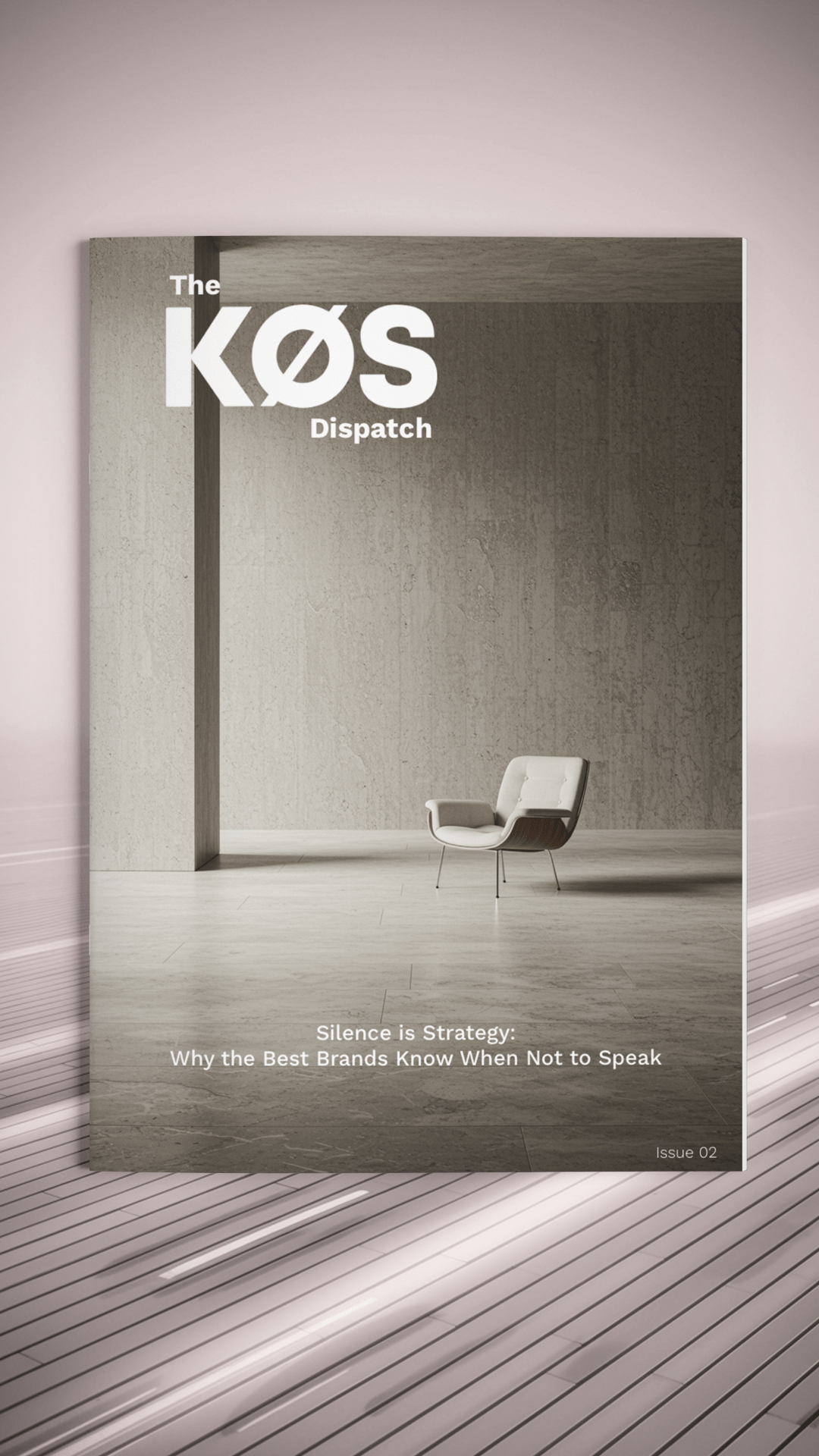
Letter from the Editor
Silence. It is a theme that has been weaving its way through my mind and heart for the past few months. In the clamor of our hyper connected world, I found myself drawn to the spaces between the noise, the pauses where meaning often hides. The inspiration for this issue, Silence is Strategy, came during a moment of stillness on a late night. I realized that the brands captivating me lately were the ones not clamoring for my attention. They were the ones who spoke in whispers, or not at all, and by doing so, spoke directly to something deeper in all of us.
As a creative strategist, I have long believed that what we choose not to say can be as powerful as any bold tagline. The stories in this issue affirm that belief. Each brand featured is a testament to the idea that restraint is not a weakness but a conscious form of strength. They remind us that mystery has its own magnetism, that confidence can be quiet and that in an age of endless declarations, choosing silence can be the most profound statement of all. From Bottega Veneta’s digital vanishing act to Hermès patient, age old mystique, these examples encourage us to rethink the impulses of modern branding. Do we speak because we have something meaningful to say, or are we just filling the void with more noise.
At KØS, our philosophy has always been to question convention, to find clarity in chaos and purpose in the unconventional. This issue is a reflection of that ethos. It is a gentle provocation to all of us, creatives and brands alike, to embrace the power of pause. In the deliberate hush of not rushing to respond, new creative truths can emerge. In the gaps between words, we often discover the real story we want to tell.
My hope is that Silence is Strategy leaves you feeling inspired to cultivate a bit more calm in your own work, to listen as much as you speak, to let imagination dance in the quiet spaces. The brands we admire do not always have to be the loudest in the room. Sometimes, the most visionary brands are those patiently, quietly designing what is next while the world yells over the present.
Thank you for letting this issue speak to you, however softly, and for finding meaning in our latest exploration. As always, we strive to bring you ideas that resonate on a human level and spark a creative fire. In the silence that follows this letter, I hope you hear your own bold vision echo back.
Until next time, stay thoughtful, stay courageous.
David Leuchter
Founder and Strategic Designer, KØS
What is the Future
Introduction
In an era of constant connectivity and noise, silence has become an unlikely power move. While most brands scramble to tweet the latest meme or flood feeds with ads, a few visionary companies choose restraint and thrive because of it. Silence is strategy might sound counterintuitive in marketing, yet many of the world’s best brands have learned the art of not speaking unless absolutely necessary. By sidestepping the deafening chatter and only raising their voice with intention, these brands cultivate intrigue, trust and desirability.
This issue of The KØS Dispatch explores how global brands across industries have leveraged silence, minimalism or strategic absence as a branding masterstroke. From luxury fashion houses that went dark on social media to retailers that built empires with zero ad spend, each case study reveals a different facet of quiet strategy. We dive into how silence, restraint or scarcity became these brands competitive edge and what we can learn from their example. In a world that never stops talking, sometimes the boldest thing a brand can do is say nothing at all.
Chapter 1: Bottega Veneta
When Silence Speaks Volumes
In 2021, Italian luxury house Bottega Veneta did the unthinkable. It wiped its social media slate clean. No Instagram, no Twitter, no Facebook, a complete digital disappearance. At a time when most luxury brands were chasing virality, Bottega opted for quiet. The move was bold, even risky, but it was rooted in a strategic belief that less visibility could create more allure. The results spoke volumes. By late 2024, Bottega Veneta surged to sixth place on the Lyst Index of hottest global brands, leapfrogging flashier competitors. While parent company Kering saw sales dip in other houses, Bottega’s sales rose by double digits in North America and Europe, a testament to the power of mystique.
Bottega’s absence strategy turned scarcity into desirability. With no official posts to scroll, fans took it upon themselves to fill the void. Unofficial fan accounts and fashion watchers became curators of the brand, amplifying its aura of exclusivity without a single paid post. In deleting its accounts, Bottega ironically generated maximum buzz through minimal presence. Followers felt like insiders in a secret club, hunting for glimpses of the latest collection via word of mouth and insider forums. Quiet luxury became Bottega’s calling card, a sharp contrast to the typical luxury marketing playbook of constant campaigns.
Other design houses soon followed suit. Celine wiped its Instagram when Hedi Slimane took the helm and Saint Laurent and Balenciaga similarly hit reset in moments of reinvention or crisis. By going dark, Bottega Veneta proved that in luxury, silence can be the loudest statement of all, signaling confidence and coveted status.
Chapter 2: Tesla
No Ads, No PR, No Problem
Electric automaker Tesla has never been shy about breaking rules, including the unwritten rule that companies must constantly market themselves. Tesla famously spends zero on traditional advertising, a stark anomaly in an industry where competitors pour billions into ads. You will not see Tesla commercials on TV or sponsored posts begging you to buy a Model 3. Instead, Tesla lets its products and fans do the talking. Exciting product launches, like the Cybertruck’s viral debut, and Elon Musk’s personal social media presence generate oceans of free publicity, keeping Tesla at the center of cultural conversation. A BrandTotal report found Tesla led the auto industry in social media engagement despite spending nothing on paid social campaigns, outperforming brands that invest heavily in Facebook and YouTube ads. By refusing to shout, Tesla creates room for organic buzz and genuine community enthusiasm to flourish.
Tesla’s communication strategy is equally unorthodox. In 2020, the company dissolved its PR department entirely, becoming the first automaker that literally does not speak to the press. Media inquiries often go unanswered, a deliberate silence that would terrify most companies. Yet Tesla’s sales and stock price kept soaring, buoyed by loyal evangelists and Musk’s unfiltered, if sometimes controversial, voice. By avoiding reactive PR, Tesla sidesteps the news cycle’s chatter. Instead of issuing defensive statements to every critique, the brand stays focused on its long term mission.
This restraint can carry risks, misinformation can spread unchecked, but it also projects an image of supreme confidence. Tesla seems too busy innovating to bother with PR sparring. The result is a tech auto powerhouse that feels fueled by purpose rather than publicity. Tesla has shown that a brand can drive intense engagement and loyalty by knowing when not to advertise and when to let silence, or a few sharp messages, speak for itself.
Chapter 3: Zara
Minimal Marketing, Maximum Impact
Walk into almost any mall in the world and you will find Zara, the fashion retailer that somehow manages to be everywhere without shouting at all. Zara spends a mere fraction of revenue on advertising, an almost unheard of figure for a brand its size. No flashy Super Bowl commercials, no billboard domination, not even a barrage of promotional emails. This is entirely by design. Zara believes that silence builds value. By not bombarding customers with hype, the brand lets curiosity and product quality do the work. Shoppers often discover Zara rather than being sold to, which makes the experience feel exclusive and self driven. In a world of constant promo noise, Zara’s restraint stands out and makes consumers lean in closer.
Zara’s marketing anti strategy extends beyond paid ads. The brand rarely announces sales or big campaigns and it avoids celebrity endorsements and loud slogans. New collections simply appear in stores with minimal fanfare. This lack of noise creates a sense that something special is always waiting in Zara if you take the time to look. It also signals confidence. Zara does not need to beg for attention. Its constant stream of fresh styles, with new designs arriving within weeks, generates enough excitement on its own.
Even on social media, Zara stays unusually quiet and curated. Its accounts are filled with polished imagery and very few words, a gallery of fashion rather than a soapbox. By underplaying engagement prompts and hashtags, Zara makes scrolling feel like visiting a chic boutique, calm, enticing and never pushy. The payoff for this disciplined minimalism is huge. Zara has built a global empire with virtually no traditional marketing. By eschewing noise and excess, Zara proves that a whisper can command more attention than a shout.
Chapter 4: Muji
The No Brand Brand
Japanese retailer Muji has mastered the art of branding by not branding. Muji’s very name means no brand in Japanese and it has practiced a philosophy of deliberate simplicity since its founding in 1980. At a time when Japanese consumers were obsessing over luxury labels and logos, Muji offered a zen like alternative, plain, quality goods with no visible logos or loud marketing attached. Products were wrapped in simple brown paper or clear cellophane, adorned only with basic product info. This was a quiet rebellion against the era’s flashy advertising, a bet that consumers were craving calm and authenticity over hype. Decades later, Muji’s no brand strategy has become its unique identity. The brand now has hundreds of stores worldwide, all styled with the same understated, clutter free aesthetic that makes browsing feel like meditation.
Muji’s restraint goes far beyond its packaging. The company spends little on advertising and relies on word of mouth and its distinctive store experience to speak for itself. Walking into a Muji store, you are not assaulted by sales heavy signage or promotional gimmicks. Neutral colors, clean displays and quiet background music set a tranquil tone. By stripping away excess, Muji manages to amplify what matters, the quality and functionality of its products.
Customers often describe a sense of trust in Muji. They feel the brand is not trying to sell them anything beyond what they truly need. In a marketplace full of brands screaming for attention, Muji’s silence feels refreshing and even principled. This approach has cultivated an almost cult like following of consumers who value minimalism and sincerity. Muji proves that you can build a global brand by essentially getting out of the way, letting products and experience speak in hushed tones and, in doing so, forging a deep, loyal connection with those yearning for less noise in their consumer lives.
Chapter 5: Hermès
The Allure of Absence
Few brands understand the seductive power of scarcity and silence like Hermès. The French luxury maison has spent nearly two centuries perfecting the art of leaving things unsaid and unattainable. Hermès most coveted items, the Birkin and Kelly bags, are famously shrouded in mystery. There are no ads shouting about Birkins, no ecommerce listings for them, no public waitlist you can simply sign up for. Instead, Hermès maintains strict, almost secretive control over who can buy these handbags and how. A customer must build a relationship and a significant purchase history with the brand for a chance to be offered a Birkin. The required spend and timing are unspoken rules, whispered among devotees but never officially confirmed. By strategically limiting production and access, Hermès transforms its products into legends. The absence of the product in the normal marketplace, its deliberate unreachable quality, is precisely what drives consumers to yearn for it.
Hermès applies this restrained ethos across its brand. It does very little overt advertising. You will not see Hermès clamoring for attention on social media or plastering cities with billboards. Instead, the brand cultivates prestige through quiet channels, exquisite craft, private in store events and word of mouth among the elite. Each store is placed in a select location, almost like a guarded treasure trove.
By refusing to chase visibility, Hermès has become one of the most visible symbols of luxury and status because owning a piece feels like gaining entry into an exclusive club. The numbers validate this mystique driven strategy. In recent periods, Hermès has reported strong profit growth even as other luxury brands struggled. Its market valuation has surpassed many louder rivals. That success flows from a simple truth, people always desire what is kept just out of reach. Hermès has turned discretion and scarcity into a marketing masterpiece, a reminder that sometimes saying no, or saying nothing at all, creates the loudest echo in consumers hearts.
Key Takeaways: The Power of Quiet Brands
Restraint can create intrigue.
Holding back information or presence, as Bottega Veneta and Hermès did, makes audiences lean in and seek you out, fostering a sense of exclusivity and desire.
Confidence lives in silence.
Brands that do not rush to respond to every trend or crisis can project stability and self assurance. Tesla’s lack of PR spin and Zara’s quiet marketing exude a confidence that what they offer is valuable without hype.
Word of mouth is powerful and free.
Several of these brands leverage their communities and customers as amplifiers. Tesla’s fans, Bottega’s admirers and Muji’s loyalists spread the word organically when the brand itself stays quiet.
Design the experience, not the noise.
From Muji’s tranquil stores to Zara’s discovery driven retail flow, the focus is on making the experience feel calm, deliberate and self directed. Silence becomes part of the UX.
Silence is a signal.
In a culture obsessed with visibility metrics, choosing not to speak sends a clear message about who you are. Silence can signal confidence, exclusivity, creative focus or even rebellion against the attention economy.
For brands willing to embrace the pause, silence is not the absence of strategy. It is the strategy.
kos.wtf · @kos.is.now · hello@kos.wtf
