Letter from the Editor
I vividly remember a conversation with a client earlier this year that stopped me in my tracks. We were dissecting why one of their products had a near cult following while a superior competitor product struggled. I found myself sketching a brain on the whiteboard, mapping out emotions, memories and sensory cues tied to the client’s brand. At that moment it became clear that the battle for brand loyalty is not happening on the store shelf or the smartphone screen, it is taking place deep in the minds of consumers.
As someone who has spent a career building brands and experiences, I am fascinated by this intersection of marketing and neuroscience. Cognitive branding, the art and science of shaping brands to align with how our brains work, has evolved from an intriguing concept into a practical playbook. This is not about gimmicks or mind tricks, it is about understanding people on a profound level. It is about tapping into the emotions that make someone fall in love with a brand, the memories that make a brand unforgettable and the subconscious prompts that draw us back for more.
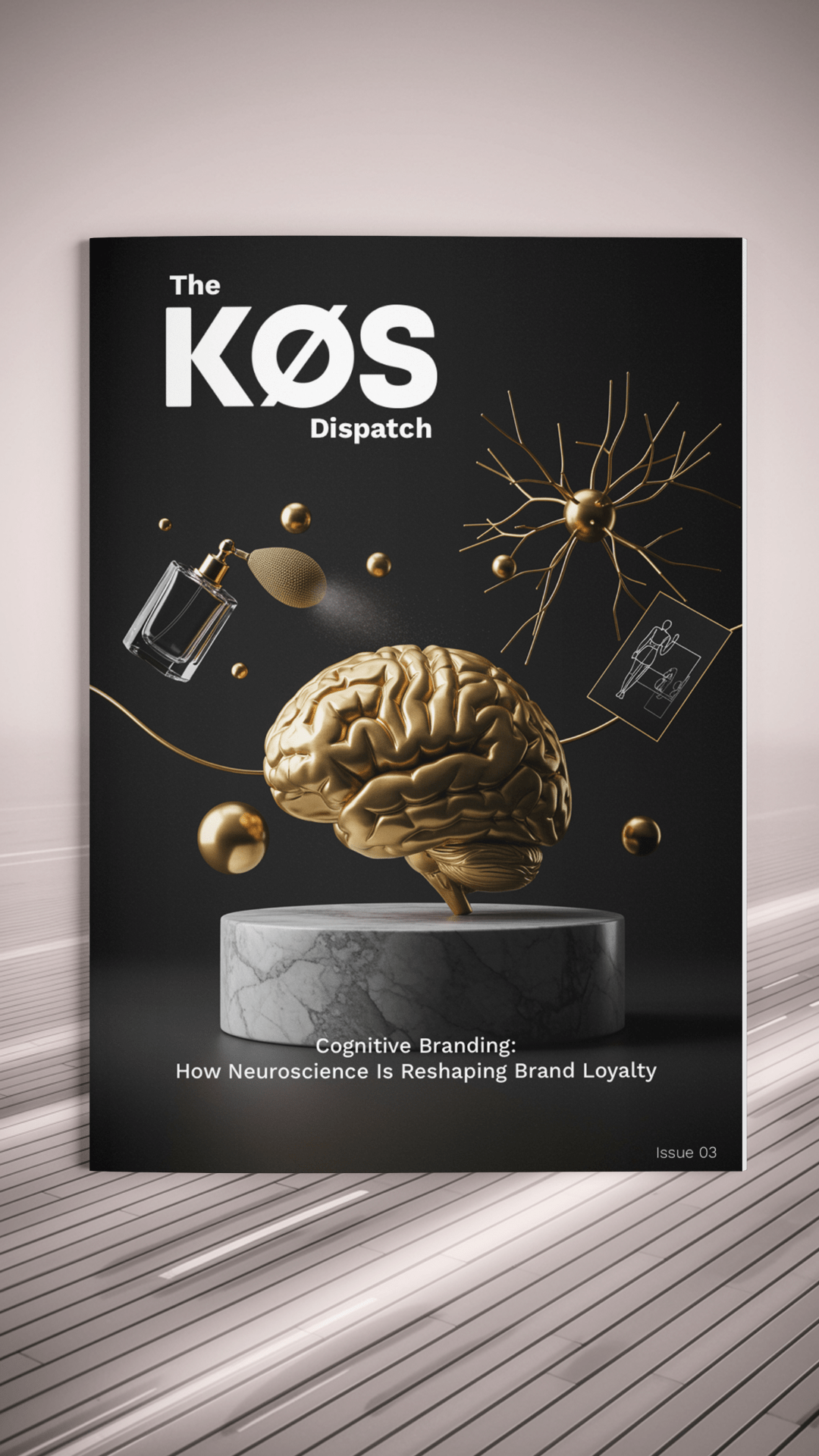
In an era when attention is fleeting and loyalty is hard won, the ability to connect with consumers’ neural pathways is a strategic edge. This third issue of The KØS Dispatch dives into Cognitive Branding: How Neuroscience Is Reshaping Brand Loyalty because I believe it is a topic every modern brand leader needs to grasp. We will explore how insights from brain science and behavioral psychology are informing the way brands craft experiences, from the tech giants rethinking user engagement, to luxury houses designing sensory allure, to wellness brands building rituals that hook us in healthy ways. My goal is that you come away from this issue not just inspired, but equipped to create branding that does not just speak to your audience, it speaks to their very neurons.
Now, let us delve into the brain of the brand.
David Leuchter
Founder and Strategic Designer, KØS
What’s the Future?
Introduction
Picture this. You are standing in a boutique considering two nearly identical products. One of them inexplicably feels right and you find yourself reaching for it without a second thought. It might be the color or scent, a familiarity you cannot quite place or perhaps the way it just makes you feel. This decision was not a logical comparison of features and price, it was your brain’s subconscious loyalty at work. In a world overflowing with choices, what truly sets that favored brand apart. The answer lies in the mind.
Modern brands are beginning to master a new kind of alchemy, using neuroscience and psychology to forge deeper bonds with consumers. In sectors from tech and automotive to fashion, food and beverage, wellness and everyday consumer goods, companies are deploying subtle and sometimes not so subtle strategies that appeal to our brains innate preferences and patterns. The stakes are high. Consumers today can switch brands with a swipe and traditional loyalty is in short supply. To stay relevant, brands are moving beyond catchy slogans and pretty logos, they are delving into cognitive triggers like neuro associations, emotional memory encoding, multisensory cues and habit forming rewards.
Neuroscience is reshaping branding in real time. Think of luxury cars engineered to sound just right to our ears or a coffee app that knows how to light up our brain’s reward centers every time we order. This article journeys through the emerging playbook of cognitive branding. We will see how global brands, from legendary fashion houses to cutting edge tech firms, are weaving brain science into their brand strategies. Expect surprising examples, not the tired case studies you have heard before, showing how the world’s savviest brands seduce our senses, stir our emotions and embed themselves into our memories.
The tension at the heart of this exploration is the balance between art and science. Branding has always been part creative craft and part understanding people. Now, with MRI machines and psychology research as new tools of the trade, the rules are being rewritten. Let us pull back the curtain on how it is happening.
Chapter 1: Loyalty Beyond Reason
The Emotional Brain and Brand Love
Why do some people love a brand as if it were a dear friend or a badge of identity. The phrase loyalty beyond reason describes that almost irrational devotion consumers can have, and it turns out that it is rooted in the emotional centers of the brain. When someone says that they are a Ferrari person or swears by a particular fashion label for life, logic has left the building and emotion and identity have taken over.
Neuroscientists have found that strong brands can trigger the same brain regions that light up for deep interpersonal bonds. In one well known study, devoted customers viewing their favorite brand’s logo showed neural activity resembling what you would expect when a devout believer observes religious imagery. Emotionally, a beloved brand becomes part of the self. This is branding’s holy grail, when your product is not just liked, but loved, when it becomes entwined with a consumer’s own story and values.
Smart brands cultivate this by appealing directly to the heart. Take Dove, for example. It is just soap and lotion, right. Yet Dove’s long running Real Beauty campaign focused on self acceptance and body positivity struck an emotional chord around the world. By championing a cause bigger than its products, Dove tapped into its audience’s deeper feelings, pride, confidence, even vulnerability. That emotional resonance translated into fierce loyalty, customers felt understood and seen, not just sold to. Dove became more than a commodity, it became a symbol of personal values.
Or consider how Nike builds loyalty through inspiration. Nike’s messaging rarely harps on shoe materials or cushioning technology. Instead, ads depict triumphant athletes overcoming odds or everyday people pushing their limits. The famous Just Do It slogan is less about footwear and more about igniting a fire inside the consumer. Psychologically, these stories stimulate adrenaline and hope, emotions that imprint strongly in memory. When you lace up Nikes, you are not just wearing shoes, you are tapping into that empowering narrative Nike has planted in your brain.
Emotional branding is not limited to uplifting feelings. Some brands cleverly use negative emotions to leave a mark. A well known security software company ran ads dramatizing the panic of identity theft before presenting itself as the savior, a classic fear then relief cycle. It worked because fear is a primal trigger. Handled carefully, it jolts attention and makes the brain especially receptive to whatever promises safety next. The key is authenticity and balance, the consumer’s emotional journey with the brand must ultimately resolve to a positive, trusting feeling.
What these examples show is that winning hearts can matter more than winning minds. Our emotional brain processes input faster and often overrides rational thought when making decisions. Brands that forge an emotional connection, be it love, pride, nostalgia or even a bit of fear, enjoy a loyalty that defies logic. It is the reason a luxury handbag can make a buyer feel confident and successful far beyond the bag’s functional use or why a certain sports car’s logo on a T shirt can swell someone’s sense of belonging to an elite club. Emotional loyalty runs deep and neuroscience is helping marketers understand exactly how to cultivate it without resorting to clichés.
Chapter 2: The Sensory Symphony
Branding Through the Five Senses
Walk into a Starbucks and take a moment to absorb what you experience. The rich smell of roasted coffee, the cozy lighting and warm colors, the mellow music, the round logo glowing green and even the weighty feel of the cup in your hand. None of this is accidental. Brands like Starbucks have composed an orchestration of sensory cues designed to quietly tune your brain toward comfort, familiarity and desire. In the theater of branding, our senses are the most direct line to our subconscious.
Our brains evolved to respond to sensory stimuli long before language or logic. A whiff of a particular scent, for example, can vault you into a memory or feeling without a single word uttered, a fact not lost on savvy brands. That is why Singapore Airlines infuses its cabins and hot towels with a signature aroma named Batik Flora. This subtle floral scent lingers in passengers’ memories, intertwining with recollections of luxurious service and calm skies. Years later, catching that fragrance can instantly rekindle the warmth of a long haul flight where you felt pampered and safe. The airline essentially bottled its brand experience in scent form, leveraging the brain’s potent smell memory link.
Sound also plays a pivotal role in cognitive branding. Consider the throaty growl of a Harley Davidson motorcycle engine, a sound so distinctive that riders worldwide recognize it instantly and even describe it as music to their ears. Harley Davidson famously attempted to trademark that rumbling engine note, understanding that the auditory signature generates excitement and signals freedom in the minds of its community. On a very different note, think of Mastercard’s recent move into sonic branding, a simple melodic sequence that plays when you complete a transaction. It is designed to give a micro dose of satisfaction and trust, all is well, your payment went through, while subconsciously reinforcing the brand’s presence without a visual logo. From the click of a luxury car door closing with a solid thud to the cheerful jingle that accompanies turning on a beloved game console, sound textures a brand’s identity in our neural pathways.
Visual cues are the oldest trick in the book, but neuroscience has sharpened our understanding of why they work. Our brains can recognize iconic logos and colors in milliseconds, long before we consciously process them. The Coca Cola red and script, for instance, set off instant recognition and even thirst in those who have grown up seeing it everywhere. Coke has spent over a century ensuring that its shade of red, its ribbon like logo and even the curvy contour of its bottle remain consistent anchors in a sea of marketing noise. This consistency creates what psychologists call fluency, the easier something is for the brain to process, the more we tend to like and trust it. So when you spot Coke’s familiar visuals, your brain effortlessly glides to recognition, often accompanied by a subtle hit of pleasure at seeing something known. It is a split second advantage that keeps the brand salient amidst countless competitors on the shelf.
Touch and taste are equally powerful. High end fashion labels care deeply about the tactile experience. The smooth glide of a silk scarf or the heft of a well crafted leather shoe communicates quality to the brain’s touch receptors, justifying the brand’s premium status at a gut level. Taste is vital for food and beverage brands. The fizz of champagne or the perfect carbonation of a cola is designed as much as any logo, calibrated to deliver a satisfying mouthfeel that customers’ brains come to crave. A brand like KFC even leverages sensory science. That blend of eleven secret herbs and spices is not just a flavor, it is a memory trigger that has patrons salivating before they reach the door.
By orchestrating a symphony of the senses, brands create immersive familiarity. Each sensory touchpoint, a scent, a sound, a texture, a color, is like a hook that latches onto a person’s memory and emotions without them realizing it. The result is a kind of subconscious loyalty. You might find yourself loyal to a store or product because it simply feels right, not fully aware that your brain has been serenaded by a finely tuned sensory experience crafted by design. Neuroscience has given us the sheet music for this approach, confirming that multisensory brand experiences can form stronger neural connections and therefore stickier brands.
Chapter 3: Memories as Assets
Storytelling and Memory Encoding
Every memorable brand has a story it sears into the collective memory of its audience. In the digital age, we often talk about virality and impressions, but the savviest brands are playing the long game, they are encoding themselves into your neural circuitry through narrative and repetition. Disney does not just sell movies or theme park tickets, it sells nostalgia laced stories that loop from generation to generation. Many of us have childhood memories of a Disney movie moment or a first visit to Disneyland etched in our minds. These are not fleeting impressions, they are life chapters. Decades later, when we stream a new Disney film with our own kids, that old neural imprint glows to life, reinforcing a loyalty that feels less like marketing and more like part of our personal history.
Neuroscience tells us that emotion and memory are deeply intertwined. To make a memory stick, it helps if it is wrapped in strong feeling. That is why Budweiser’s most talked about Super Bowl ads often feature Clydesdale horses reuniting with owners or puppies finding their way home, miniature films that can make even a hardened viewer tear up. Those emotions act as a highlighter in your brain, underlining the brand’s message, Budweiser equals heartwarming moments, in a way a rational pitch about taste or brewing quality never could. The next time you see a Budweiser in the store fridge, your brain is not analyzing hops, it is faintly recalling that stirring story, nudging you toward the can with the Clydesdales on it.
Memory encoding in branding is not just about grand storytelling. It can be as simple as a slogan or jingle repeated until it burrows deep into collective consciousness. Intel’s five note chime or McDonald’s I am lovin it jingle have played so many times globally that they have become part of the brain’s background music. The brilliance here is consistency. Our brains favor the familiar, a phenomenon known as the mere exposure effect. Each repeat of a tagline or tune strengthens the neural pathway associated with that brand. Eventually, hearing those notes or that phrase instantly calls the brand to mind, like a well trodden path in the woods that always leads you home. It is no surprise that brands guard these assets fiercely, because they are, in a very real sense, pieces of mental real estate they own in our heads.
Sometimes memory making intersects cleverly with product experience. Coca Cola, as noted earlier, leverages nostalgia perhaps better than any brand. Their annual holiday campaigns with Santa Claus and jingling bells have been so consistent that a Coke at Christmas feels like a tradition of its own. The result is that many consumers have an emotional memory of Coca Cola tied to joyous holiday gatherings. In a more modern twist, Instagram’s nostalgic filters, deliberately tinged with vintage hues, align the platform with the idea of cherishing memories, subtly reinforcing why you use it to capture your life’s highlights.
Cognitive branding is not only about creating new memories, it is also about tapping into memories consumers already hold. Some luxury carmakers invoke their decades old heritage in ads, showing black and white photos of their classic models and the cultural icons who drove them. They know that by rekindling a collective memory of the good old days or a bygone golden era, they can transfer that warm glow to their current lineup. The brain loves a coherent story. If a brand has been part of cherished moments in the past, we are inclined to keep it in our story moving forward.
In a sense, every brand strategist is also a memory maker. By using tools like narrative arcs, nostalgia, consistent catchphrases and iconography, they are encoding the brand into the hippocampus of their audience, the brain’s vault for long term memory. Once you occupy a spot in that vault, you gain an advantage that every competitor will find hard to shake.
Chapter 4: Habit Forming Brands
Dopamine, Rewards and Rituals
Have you ever found yourself reaching for the same brand of tea every morning, almost on autopilot. Or noticed that you have not missed a day in your meditation app for months because it gently nudges you with reminders and rewards. These are not accidents, they are the result of brands deliberately embedding themselves into our routines and tapping into the brain’s reward system. If emotional storytelling wins hearts, habit forming strategy wins habits and habits can be the backbone of lifetime loyalty.
At the core of habit formation is a simple neurological loop, cue, routine, reward. Brands today are masters at inserting themselves into this loop. Starbucks is a textbook example. The morning aroma of coffee, the cue, leads you to order your usual latte, the routine, which is followed not just by the caffeine kick but also by the small rush of earning Stars in the Starbucks Rewards app, the reward. Hit enough stars and you get a free treat, another reward. This cycle, reinforced daily, turns a casual customer into a regular and a regular into someone who will not even consider another café. The Starbucks app adds a gamified layer to the habit loop, with progress bars and bonus challenges that give the brain the same kind of hit a video game does. It is coffee as a calibrated cognitive addiction, the friendly kind.
Tech companies lean heavily into neuroscience to build sticky habits. Instagram, TikTok and other social media platforms exploit what psychologists call variable rewards, the same principle that makes slot machines addictive. Every time you refresh your feed or check notifications, you are not sure what you will get, maybe a lot of likes or maybe nothing special. That uncertainty and surprise release dopamine in the brain, encouraging you to check again and again. Over time, reaching for these apps becomes a mindless habit, as automatic as scratching an itch. For brands advertising on these platforms or owning them, that habitual engagement is marketing gold. It means eyeballs glued to screens and endless opportunities to serve up branded content in the cracks of our attention.
Physical products use habit loops too. Think of toothpaste. Decades ago, marketers discovered that adding a minty flavor and foaming action to toothpaste, which are not actually necessary for cleaning, provided a sensory reward, a fresh, tingly mouth, that made people feel the product worked and encouraged daily use. That tingle became a cue and reward in one, cementing twice a day brushing as an ingrained behavior. Colgate mastered this strategy decades ago. It was not superior science that made the brand ubiquitous, but a clever design of experience that the brain associated with accomplishment and cleanliness. In the broader consumer goods world, from skincare regimens to morning cereals, brands constantly seek to become part of a customer’s ritual. The ones that succeed essentially train the consumer’s brain to crave them at specific moments, be it a mid afternoon snack or a nightly skincare wind down.
Loyalty programs and subscriptions are explicit strategies to hook you for the long haul. Amazon Prime is a masterstroke in this regard. Customers pay upfront for Prime and immediately their brain starts tallying value to make it worth it. Free shipping becomes an expectation, ordering more on Amazon becomes the routine and each speedy delivery or exclusive Prime deal provides a small reward. The psychological effect is powerful. Prime members feel a subtle guilt or fear of missing out if they stray to a competitor because they have invested in Amazon’s ecosystem. Airline frequent flier programs work similarly, turning travel into a game of points and status. You are no longer just flying to get somewhere, you are flying to earn silver or gold status that makes you feel like a VIP. The brain’s reward circuits respond strongly to that.
The science is straightforward but potent. Dopamine, the neurotransmitter that signals pleasure and reinforcement, does not only respond to big wins, it responds to small, frequent rewards and achievements. Modern brands engineer these into their offerings wherever possible. Fitness apps give you badges for hitting your step goals, e commerce sites give you flash sale coins and meditation apps celebrate your streak of consecutive calm days. Each is a small signal to the brain, good job, stick with this. Over time, these signals weave a brand into the fabric of your daily life.
In a society increasingly focused on well being, there is a new twist to this strategy. Brands are trying to build healthy habits that also benefit them. A wellness brand might encourage a daily gratitude journal or a smart water bottle might prompt you to hydrate regularly. If the habit improves your life, you are grateful to the brand that enabled it, which deepens your loyalty. It is a shift away from tactics that trap customers toward becoming a genuinely helpful part of their routines.
Chapter 5: Tribes and Identity
When Brands Become Beliefs
Humans are tribal creatures at heart. We seek belonging and identity in the groups we align with. In the modern world, brands have become one of those markers of tribe. When you see someone wearing a Patagonia jacket and carrying a Nalgene bottle covered in stickers, you are seeing personal values on display, a love of the outdoors, sustainability and perhaps a free spirited mindset. Patagonia has cultivated more than customers. It has disciples who share a creed of environmental responsibility, to the point of the company famously encouraging people not to buy a jacket they do not need. That paradox only strengthened the tribe’s bond. By putting values first and products second, Patagonia taps into consumers’ deeply held beliefs, an incredibly sticky glue for loyalty, because abandoning the brand can feel like betraying a part of oneself.
Some brands have become outright cultural movements. Tesla, for instance, is not just an electric car company. It is a symbol of innovation and a sustainable future that its fans passionately evangelize. To buy a Tesla often means to join a community of believers, people who will eagerly swap stories about road trips and software updates and who feel they are driving more than a car, they are driving change. This brand as belief effect can border on the religious, and neuroscientists note that devoted brand communities can light up the brain in ways similar to religious fervor. When a product achieves that status, traditional marketing becomes almost unnecessary. The community sustains itself through word of mouth and peer reinforcement, proudly wearing the brand like a badge of honor.
The power of identity in branding is very visible in fashion and lifestyle. Supreme, the skatewear brand from New York, turned small drops of limited edition clothes into a global subculture. People camp overnight on sidewalks for a Supreme hoodie not just for the quality of the cotton, but because owning that piece grants membership in a specific tribe. The Supreme logo on a T shirt telegraphs a whole attitude and aesthetic. This tribe mentality is so strong that the brand hardly needs to advertise conventionally. The scarcity and word of mouth within the community do the work. It is a case study in how blending exclusivity with community creates a self propelling loyalty loop. The harder it is to get in, the prouder you are to be part of it and the more you reinforce the brand’s mystique to others.
Heritage brands rely on identity too. Rolex, for example, sells watches but markets status. A Rolex is not about telling time, it is about telling others and yourself that you have made it. The brand has carefully nurtured this prestige aura through celebrity ambassadors and placement in stories of achievement, from climbing Everest to winning Grand Slam titles. When someone chooses Rolex, they are aligning with a tribe of winners and adventurers in their mind. It is a deep psychological appeal to who we want to be and how we want to be seen.
Brands that become woven into identity often encourage participation because active participation cements belonging. LEGO is a playful example. It is technically a kids toy, but it nurtures a huge adult fan community that calls itself AFOLs, Adult Fans of LEGO, that feels like a club. LEGO leans into this, hosting fan conventions and letting users submit designs for future products. By co creating with its tribe, LEGO ensures that the brand is not just a product on a shelf, but part of people’s life stories and friendships.
From a neuroscience perspective, community and identity satisfy fundamental social needs. Belonging to a group activates reward pathways and even pain relief pathways in the brain. We are wired to seek connection and brands that facilitate that connection gain more than customers, they gain believers. The strategic takeaway is that when a brand stands for something meaningful and invites people to rally around that meaning, it elevates the relationship from consumer and brand to person and community. Loyalty in this context is far more resilient. It is easy to switch to a cheaper detergent. It is much harder to walk away from your tribe.
Conclusion
The New Paradigm of Brand Loyalty
Brand loyalty, once built on convenience or habit alone, is increasingly a complex neurological tapestry. Today’s most forward thinking brands are not leaving loyalty to chance or to old tactics. They are consciously architecting experiences that resonate with the brain’s predispositions, our hunger for emotion, our sensory wiring, our memory pathways, our reward systems and our social identities. This cognitive branding approach represents a new paradigm. It is as much about psychology and neuroscience as it is about marketing.
For creative leaders and high level brand strategists, the implications are profound. We can now design brand interactions with a deeper understanding of what will light up a customer’s brain and why. A premium, disruptive brand does not succeed by accident. It succeeds because it finds a home in both the heart and the mind, speaking to consumers on multiple levels that they themselves might not fully recognize.
This power comes with responsibility. Using neuroscience in branding raises ethical questions. Where is the line between persuasion and manipulation. The most emotionally intelligent brands will use these insights not to exploit customers, but to serve them, to create products, services and messages that genuinely enrich people’s lives while also satisfying business goals. The goal is not to turn consumers into mindless addicts. It is to cultivate loyal advocates who feel good about the relationship.
In this new world of cognitive branding, success belongs to those who respect the subtlety of the human mind. It is about being scientific without losing the magic and being data driven without losing the humanity. As you craft your next strategy or campaign, remember that you are engaging with brains, not just demographics. The brands that win tomorrow will be those that slip into the grooves of memory, tug the heartstrings, reward the instincts and invite us into a tribe, all at once.
Key Takeaways
Emotions over logic.
Loyalty today is often emotional, not rational. Brands that evoke genuine feelings such as joy, pride, trust or nostalgia create bonds that outlast any feature wars with competitors.
Sensory appeal.
A brand that can be seen, heard, smelled, touched or tasted in memorable ways gains a backdoor into consumers’ minds. Multisensory branding is not fluff. It is neuroscience, building associations that are hard to erase.
Memory makers.
Great brands are great storytellers. Consistent narratives, symbols or even jingles act like mental bookmarks, ensuring your brand is what customers recall when it counts.
Habit hooks.
From reward apps to well timed nudges, brands that integrate into daily routines via the brain’s reward loops turn usage into unthinking habit. The easiest loyalty is when you do not even consider the alternatives.
Identity and tribe.
The strongest loyalty looks less like customer retention and more like belonging. When embracing a brand feels like joining a community or affirming one’s values, you have reached the pinnacle of brand affinity.
kos.wtf · @kos.is.now · hello@kos.wtf
